
Harvesting Health: How Port Townsend’s Garden-Fueled School Meals are Growing Healthier Futures

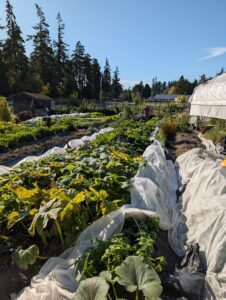
Port Townsend School District in Washington is redefining what it means to serve healthy, sustainable meals in schools. With the support of the Healthy Meals Incentives (HMI) grant, the district has transformed its school nutrition program into a vibrant, community-driven initiative that connects students to the land, their food, and each other. This transformation was made possible through the HMI Initiative, a partnership between Action for Healthy Kids (AFHK) and USDA’s Food and Nutrition Service (FNS), which awarded 264 subgrants to School Food Authorities (SFAs) nationwide to enhance the nutritional quality of school meals and promote nutrition education.
Before receiving the HMI subgrant, Port Townsend faced challenges common to many small districts: limited staffing, outdated kitchen equipment and facilities, and high food costs. Despite these hurdles, the district had already laid the groundwork for success through its scratch cooking program, which began in 2016. The HMI grant provided the momentum needed to expand these efforts, allowing the district to hire a year-round gardener and purchase essential processing equipment to handle the amount of produce harvested in its gardens.
The school gardens are now on track to grow 5,000 pounds of fresh produce this year, including lettuce, peas, beans, cabbage, kale, basil, berries, potatoes and more! Students enjoy meals like pesto pasta made from basil harvested and processed over the summer, with enough pesto stored to serve it monthly throughout the year.
Community Collaboration at Its Core
Port Townsend’s success is deeply rooted in its partnerships. The district collaborates with Food Bank Growers, whose volunteers assist in garden maintenance, and with The Gleaners, who provide fresh fruit from local orchards—ensuring that up until mid-November, the district doesn’t need to purchase fruit. Any surplus produce is shared with the local food bank, creating a reciprocal system that minimizes waste and maximizes impact.
Student Engagement and Nutrition Education
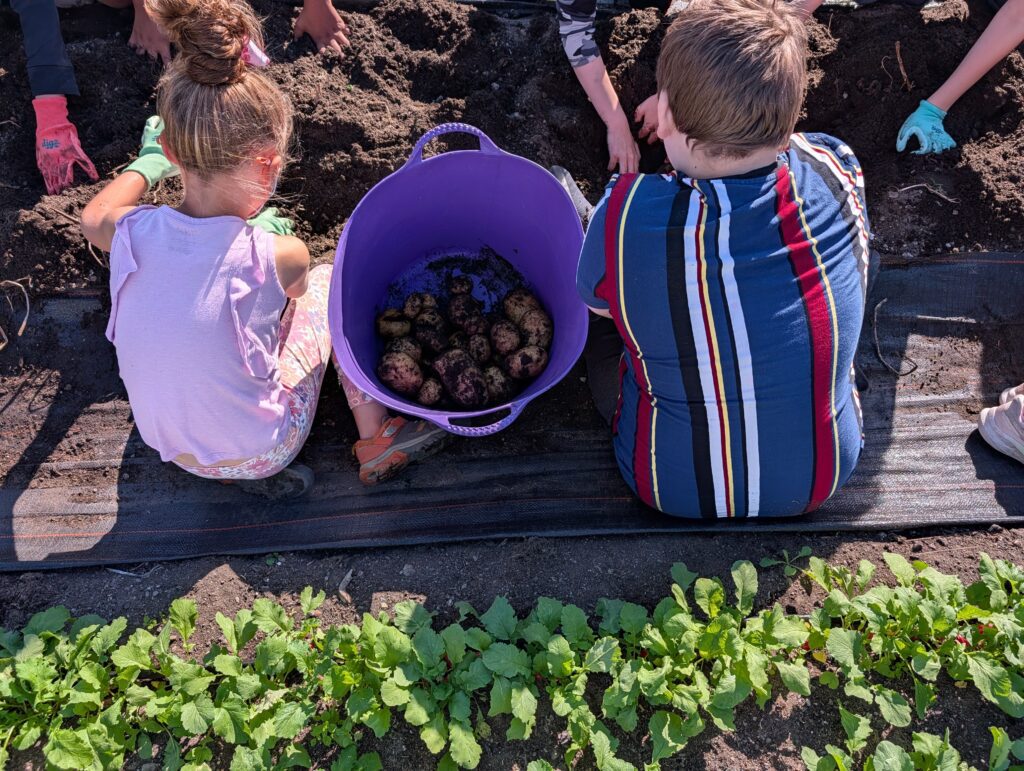
Students are active participants in every stage of the food cycle. From planting and harvesting in the teaching garden to taste-testing and menu planning, their involvement is central to the program’s success. At the high school level, students in Spanish and culinary classes grow plants like black beans, wheat, and corn, which they transform into things like tortillas and pizza crusts. Meals are prepared in a brick oven, reinforcing hands-on learning.
Taste tests, sensory exploration, and garden-to-table experiences help students understand and appreciate the origins of their food. This engagement has led to increased participation in school meals and a deeper connection to healthy eating habits.
Creative Solutions and Lasting Impact
Port Townsend’s approach to sustainability is both practical and innovative. Menus are planned weekly based on garden yields, and leftovers are creatively repurposed—tacos become burritos, and sloppy joes find new life as alternate entrees. This not only reduces waste but also teaches students the value of resourcefulness.
Trailblazing Breakfasts and Lunches
Port Townsend School District has revolutionized its breakfast program by embracing scratch cooking and eliminating high-sugar options. The district removed cereals with more than five grams of sugar per serving and introduced fresh, locally sourced yogurt. These changes have significantly reduced added sugars while increasing the nutritional value of breakfast offerings. The district also expanded breakfast access by adding a second service at the middle school, mirroring a successful model already in place at the high school.
This expansion, paired with healthier menu options, led to a dramatic increase in breakfast participation—from 19,491 meals served in 2022– 23 to 34,564 in 2023–24. Student feedback, gathered through surveys and collaboration with the Students for Sustainability Club and Student Voice Group, has helped shape the menu and ensure high satisfaction with the new offerings.
In its lunch program, Port Townsend has taken bold steps to reduce sodium while maintaining flavor and student appeal. The district replaced processed meats with fresh or frozen lean proteins, such as ground beef and chicken thighs, seasoned in-house with salt-free spice blends. Staff received hands-on training in flavor-building techniques using herbs, citrus, and natural acids, supported by workshops at Pike Place Market’s Atrium Kitchen. These efforts have resulted in sodium reductions of 100–300 mg per serving in key dishes like tacos, soups, and roasted potatoes. Students across all grade levels participated in taste tests and surveys to guide recipe development, with over 70% rating the new meals as “tasty” or “very good.” Garden-based herb education further reinforced these changes, helping students appreciate natural flavorings and contributing to a noticeable decrease in food waste.
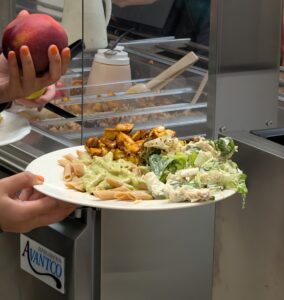
During lunch, high school students eagerly self-serve items from the salad bar, with school nutrition professionals often telling them to “Go easy on the Caesar!” as students pile their plates high. The salad bar is consistently popular, with items almost always fully consumed – an encouraging sign of student enthusiasm for fresh vegetables and choice-driven meals.
A Model for the Future
Port Townsend School District’s journey is a testament to what’s possible when vision, community, and student voice come together. With strategic investments in staffing, equipment, and education, the district has created a sustainable model that nourishes both body and mind. Their story is not just one of overcoming challenges—it’s a blueprint for cultivating wellness, resilience, and empowerment through school meals.
Find more HMI success stories in our Cafeteria Chronicles blog
This material is based upon work that is supported by the U.S. Department of Agriculture, Food and Nutrition Service. USDA is an equal opportunity provider, employer, and lender.