Ramen, Resilience, and Results: Englewood Schools’ Recipe for Nutrition Success
Englewood Schools in Colorado has made significant strides in promoting a healthier future for its students and families with the support received from their Healthy Meals Incentives Initiative (HMI) subgrant. Through the HMI cooperative agreement between USDA’s Food and Nutrition Service (FNS) and Action for Healthy Kids (AFHK), AFHK distributed 264 subgrants to School Food Authorities (SFAs) aimed at improving the nutritional quality of school meals and enhancing nutrition education for students and families.
Prior to receiving the HMI subgrant, Englewood Schools faced challenges due to staffing shortages, lack of training for school nutrition staff, food purchasing difficulties and outdated equipment. In their application for the subgrant, Nutrition Services Director, Nicole Withee, expressed that staffing shortages in the nutrition program had led to her providing hands on support in the kitchens to prepare school meals. Her time preparing meals took time away from researching recipes that reduce sodium and added sugars, as well as her ability to train the nutrition program staff on needed skills to improve their efficiency. Additionally, she stated, “Food purchasing and procurement is also a significant challenge. As a small district, we are unable to meet vendor minimums and too small to receive direct deliveries, resulting in increased food costs.”
The HMI subgrant has helped Englewood Schools overcome many of the hurdles that the nutrition program faced and enhance their nutrition program beyond their initial expectations. They were able to update outdated kitchen equipment, provide training to their nutrition staff to increase efficiency, and provide every elementary school in the district with a hydroponics system. Rather than housing the hydroponic systems in the cafeteria or kitchen areas, Englewood Schools engaged their Science, Technology, Engineering, Arts and Mathematics (STEAM) department to house the systems in classrooms. The STEAM department helped integrate nutrition education efforts into each school. Students help plant, care for, and harvest the produce grown in the hydroponics systems. Additionally, they are able to test what types of environments encourage growth for different types of produce. The schools then serve that fresh produce in their cafeteria. When students know the produce they grow in their STEAM classes are served in the cafeteria, they are more eager to try what is served.

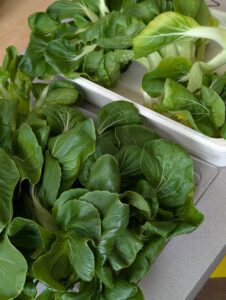
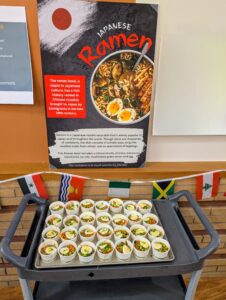
One example was bok choy. After the 5th grade students harvested the vegetables, they walked it down to the cafeteria. The nutrition program staff then used the bok choy in a dish they were taste testing during the 5th and 6th grade lunches – ramen. The 6 grade students began cheering when they were told that the bok choy they had been growing was used in the taste test dish. Students lined up to try the Ramen served, and several students asked for seconds.
The results from the students’ surveys were clear – they really enjoyed trying ramen and wanted it to be on the school’s menu. Nutrition program staff reported that it was simple and quick to make, and now they are considering putting it on the menu next year and creating a Ramen Bar where students can select a variety of fresh produce to put in their meal!
How does Englewood Schools plan to continue this work in the future? According to Nicole, “… Action for Healthy Kids has really made that easy…”. The knowledge gained and resources provided do not go away at the end of the funding period, so the nutrition program will continue to implement what they have learned from webinars and technical assistance. Additionally, the district is able to save money by growing their own lettuce. That money is then invested into maintaining the hydroponics systems and purchasing additional seeds.
Englewood Schools’ journey with HMI exemplifies the transformative power of targeted support and collaboration. With the subgrant, the district not only overcame significant challenges but also fostered a culture of health and education that will benefit students for years to come.
The integration of hydroponics systems into the STEAM curriculum has not only enhanced nutrition education but has also sparked enthusiasm among students, as evidenced by their excitement over the bok choy harvest and decreased food costs! As Englewood Schools continues to leverage the knowledge and resources gained, they are well-positioned to sustain and expand their innovative nutrition program – ensuring that every student has access to nutritious meals and the opportunity to learn about healthy eating in a hands-on way. Their dedicated efforts have the potential to create positive change in the lives of their students for years to come.
Find more HMI success stories in our Cafeteria Chronicles blog
This material is based upon work that is supported by the U.S. Department of Agriculture, Food and Nutrition Service. USDA is an equal opportunity provider, employer, and lender.